Flickering Lights: What It Means and What to Do
Lights that flicker, dim when an appliance kicks in, or flutter for no reason sit in an awkward category. Usually the cause is harmless; occasionally it is the first visible sign of a connection heating toward failure.
Telling those two stories apart from the light switch is impossible, which is the whole point of this page. If any burning smell arrives with the flicker, skip the reading and call Beecroft's local electricians on (02) 9538 7444 now.
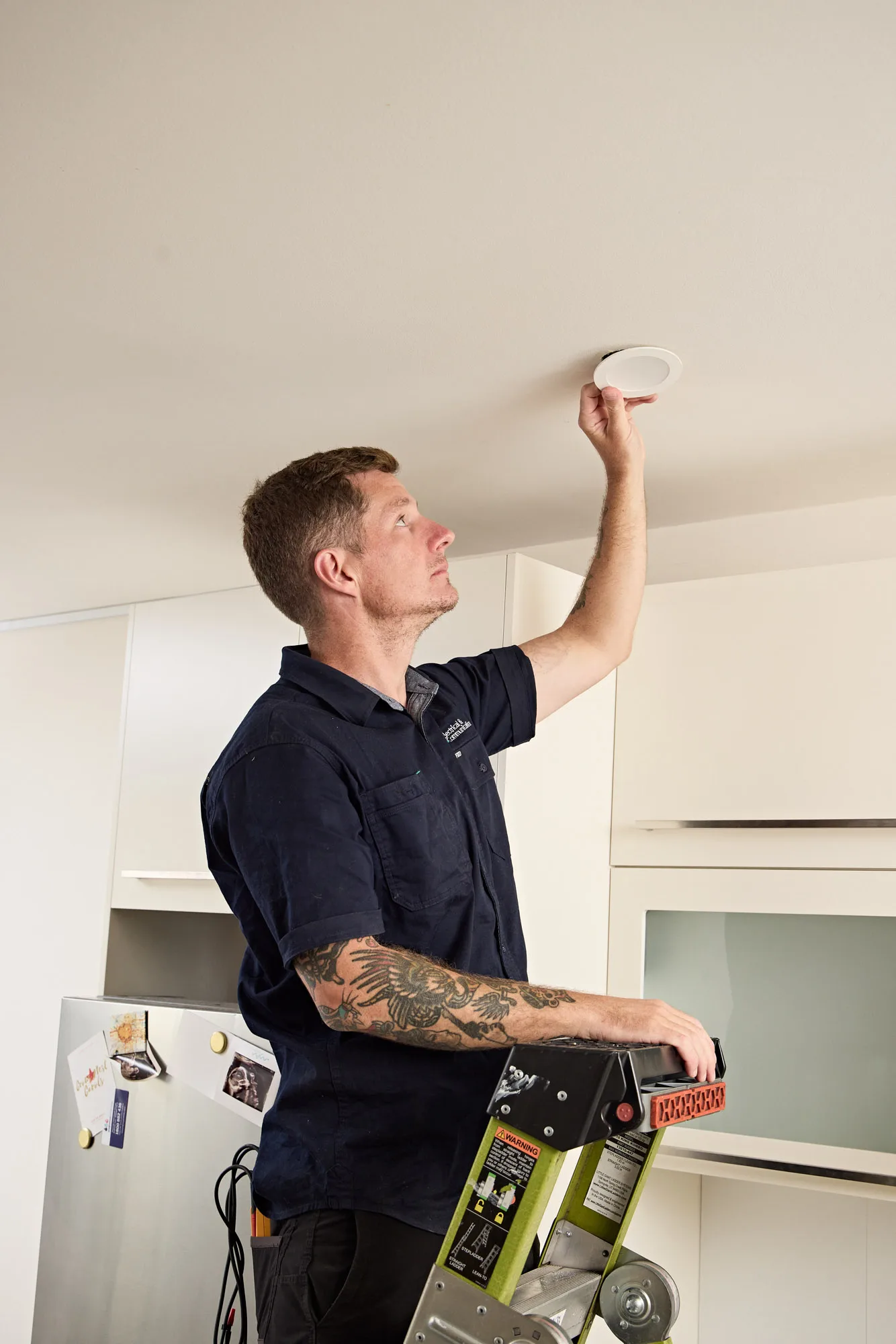
Why Your Lights Are Doing That
Flickering means the voltage reaching a fitting is not holding steady. That instability starts in one of a few places: a loose or degrading connection, a failing driver or transformer inside the fitting itself, or a circuit that sags whenever a bigger load joins it.
There is also a famously innocent version. Older dimmers paired with modern LED globes frequently refuse to cooperate, even though each works perfectly on its own.
The catch is that every one of these causes puts on the same show from the couch. A tired globe and a heating connection can flicker identically, so a proper test always beats watching and hoping.

When a Flicker Is Urgent
Most flickering annoys rather than endangers, but a few versions of it jump the queue. Ring straight away if:
- the flicker worsens whenever a heater, oven or other big appliance runs
- a switch or nearby power point feels warm
- there is even a faint warm-plastic edge to the air
A steady, consistent flicker confined to one fitting can usually hold on for a booked visit within a day or two. It should still get that visit rather than becoming part of the furniture.
The fair middle ground reads like this: a lone flickering globe is rarely an emergency, while flickering that spreads across rooms or grows more frequent by the week has earned itself a prompt appointment.
Age tips the scales too. On a ceramic-fuse board that predates safety switches, the small current changes behind a flicker can go completely unpoliced, so older setups deserve less benefit of the doubt.
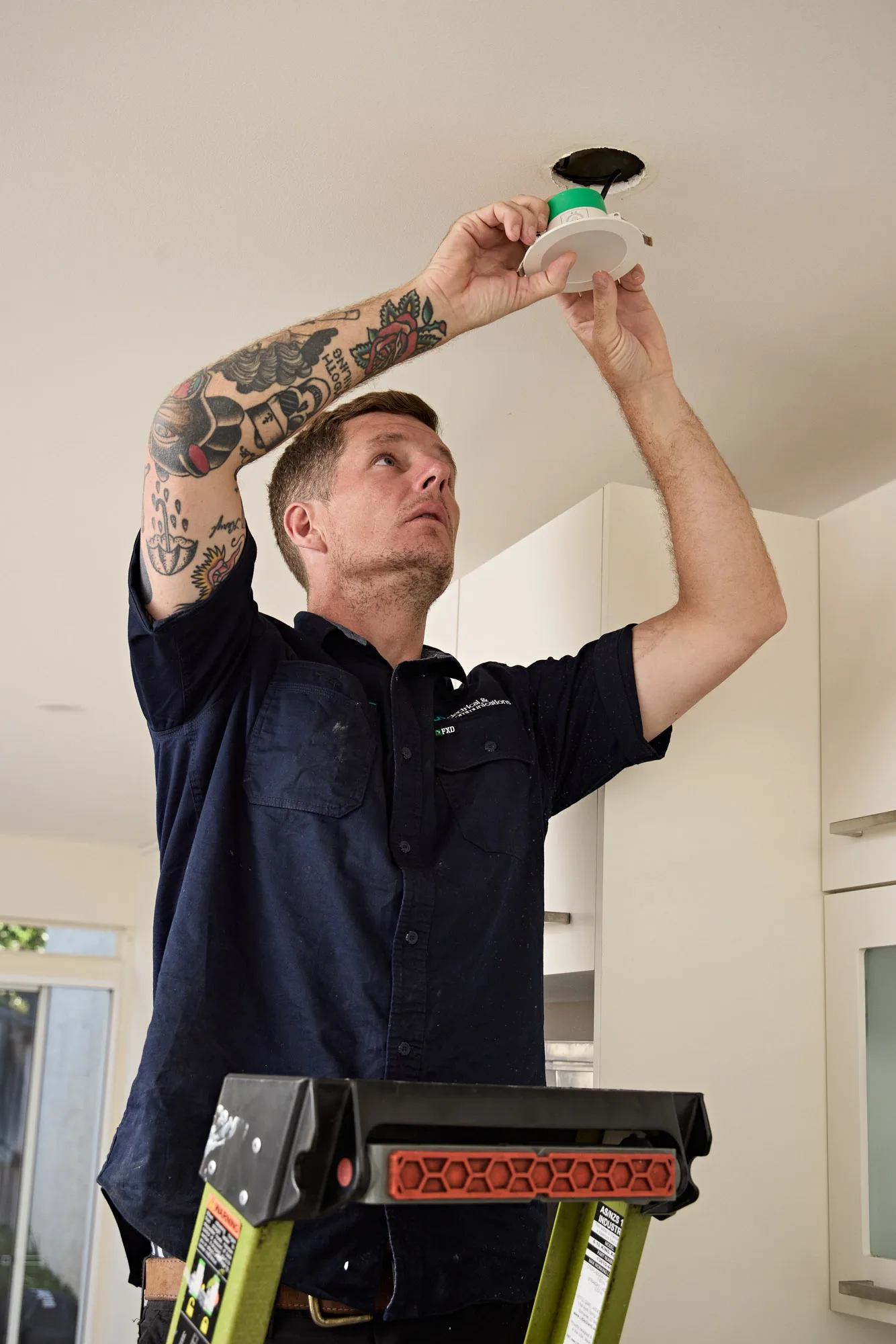
Common Causes of a Flicker
In the order we actually find them once the testing is done:
- A loose neutral or active wire, at the board, a junction, or inside the fitting itself.
- A dimmer and LED globe that do not match, older hardware never designed for today's low-wattage loads.
- A failing LED driver or transformer, the small converter tucked inside many modern fittings.
- A circuit running near its comfortable limit, sagging each time a heavy appliance on the same run starts up.
- A worn light switch, its internal contacts no longer closing cleanly after years of use.
- Supply-side voltage wobble, the rarest of the lot, suspected only when the entire house flickers in unison.
What To Do Before We Arrive
Nothing here fixes anything, and nothing here should. It just makes the diagnosis faster and cheaper:
- Track the pattern. One fitting, one room or the whole house, and whether it lines up with an appliance starting.
- Identify any dimmer in the mix. Knowing the globe hangs off dimmed hardware narrows the field considerably.
- Rest that circuit. Keep large appliances off the run in the meantime if load seems to be the trigger.
- Call (02) 9538 7444 with the story. What you describe decides which gear comes out on the truck.
How We Fix and Certify the Repair
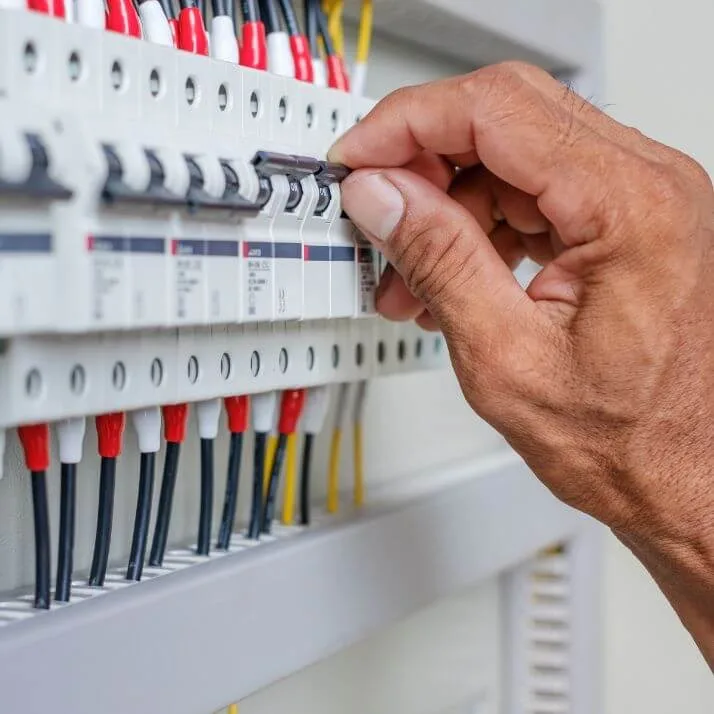
Fault-finding starts from your description, then moves to testing the circuit under genuine load rather than eyeballing fittings. Connections get checked at the board, at the switch and at the fitting, and a thermal camera confirms whether anything along the run is quietly warming.
A failing driver or mismatched dimmer is a simple swap, normally finished in one visit. A loose connection gets remade correctly, with everything downstream checked for collateral wear.
If the real story is a circuit carrying too much, we lay out the options with numbers attached instead of masking the symptom. Repairs are tested before we pack up, and certified wherever the work is notifiable.
Why It Seems Worse in the Evening
Plenty of callers mention the same detail: the lights behave all day, then start dancing after dark. That timing is a clue, not a coincidence.
Evenings are when household load peaks. Cooking, heating, hot water recovery and every screen in the house arrive at once, and a circuit that idles comfortably at noon gets pushed toward its limit.
A marginal connection or an undersized run shows the strain exactly then. So an evening-only flicker points toward load-related causes and away from a dying globe, which behaves badly at any hour.
Mention the timing when you book. It genuinely shortens the search.
Preventing the Next Flicker
A flicker repaired at its true cause should stay repaired, and a repeat within months usually means the first diagnosis stopped at the globe. Keeping it away for good mostly comes down to:
- Pairing dimmers and globes correctly as part of professional light installation, not mixing hardware eras and hoping.
- Booking electrical repairs for heavily loaded circuits before a connection rattles itself loose.
- Reviewing an ageing board when flickering keeps returning across different fittings.
- Spreading high-draw appliances across circuits, particularly through winter.

The Beecroft Pattern We Keep Seeing
Much of the housing here sits inside the Beecroft-Cheltenham Heritage Conservation Area, so renovation tends to work around original fabric rather than through it. Wiring gets extended room by room across the decades instead of being redesigned as a whole.
The result is original lighting loops carrying more fittings and switching points than they were ever drawn for. That is precisely the environment where a connection starts working loose under repeated load.
We meet it far more in the older streets around the village than in the newer units by the station, simply because those circuits have had a century of additions.
Servicing Beecroft and Nearby Suburbs
A flicker paired with a warm switch belongs on our scorch marks and hot points guide instead. Where a circuit drops out entirely alongside the flutter, read up on a breaker that keeps tripping.
The same fault-finding covers Pennant Hills and Epping alongside Beecroft itself.


Call Now About Your Flickering Lights
New, worsening, or joined by warmth or odour: any one of those makes the flicker worth a phone call today. Ring (02) 9538 7444, describe what the lights are doing, and we will have it looked at properly.
Five minutes on the phone beats another month of wondering.
Common questions
Flickering Lights FAQs
The flicker questions we field most often, answered plainly.
How do you actually track down which light or connection is flickering?
We start at the switchboard and test the affected circuit under load, then work outward to the fitting, the switch and the wiring between them. Flickering can look identical whether the cause is at the globe or three rooms away, so testing beats guessing every time.
Is it more likely the light fitting or the wiring behind it?
A single fitting flickering on its own often points to the globe, driver or the fitting's own connection. Multiple lights flickering together, especially when an appliance kicks in, usually means the fault sits further back, at the switch, the circuit or the switchboard.
Do old fuses make flickering worse than a modern board would?
Yes, in a couple of ways. Ceramic fuses don't respond to the small current changes that trip a modern safety switch, and the board itself is often carrying decades of small additions, so a loose connection anywhere upstream can affect more lights than it would on a newer setup.
What does it cost to fix flickering lights?
It depends on where the fault turns out to be, a fitting swap is a smaller job than tracing a loose connection through the switchboard. We test first and give you a fixed written quote for the actual fix before any work starts.
How quickly can someone get out to a flickering lights job in Beecroft?
For anything that isn't a live emergency, we're often able to fit you in same or next day. If the flickering comes with a burning smell or visible arcing, tell us when you call and we'll treat it with more urgency.
Could unrepaired flickering affect an insurance claim later?
It can, which is why the safest move is having it looked at and, where the work counts as notifiable, certified. A known electrical fault left unaddressed is a much harder position to argue from than one that was properly diagnosed and fixed.